|
1. WELCOME:
Dear friends welcome to my Home Page on Human Posture. My name is
Selvaraj, I am from India, and I have been interested in the subject
of Human Posture for the last 25 Years – ever since, I came across a
book on the subject by Dr. Wilfred Barlow.
2. THE BOOK BY DR. BARLOW
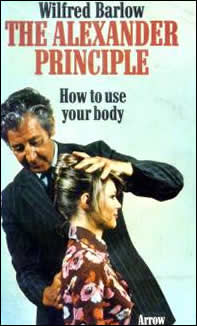 |
Fig 1: Dr. Wilfred Barlow, a Rheumatologist, did
extensive research on human posture and authored the Book, The
Alexander Principle. His book suggests ways to correct your
posture and highlights medical problems that can arise from
faulty posture. The medical problems discussed in Dr. Barlow’s
books are Rheumatism, Arthritis, Cervical Spondylosis, Back
Pain, Breathing Disorders, Stress Disorders and
Gastro-intestinal Disorders. Dr Barlow estimates that 99% of
adults will have faulty posture (more on this
later). |
3. INTRODUCTION:
Speculation on human posture forms part of our philosophical,
social and cultural heritage. Human beings have pondered this
subject from ancient times. In India, around 400 BC, the discipline
of Yoga took shape to help invigorate the body, calm the mind, and
to develop ones hidden mental and spiritual powers. Over the past
hundred years, many other disciplines such as Chiropractics,
Osteopathy, Rolfing and The Alexander Method of posture correction
have evolved to help individuals cope with their posture. You can
find out more on these subjects in the Internet.
In this presentation we look at human posture from a different
perspective, the perspective of an Engineer, deviating from
traditional more intuitive methods used to understand the problem.
The bones and muscles in the body form a Mechanism, controlled by
the Human Brain. This composite system can be explored using
Engineering Principles to facilitate better scientific understanding
of the problem.
4. THE HUMAN MUSCULOSKELETAL
SYSTEM:
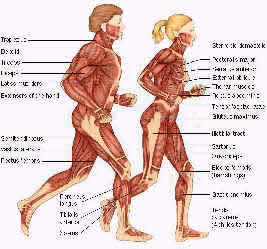 |
Fig 2: The human body is a mechanism
(Picture, Adam.com) |
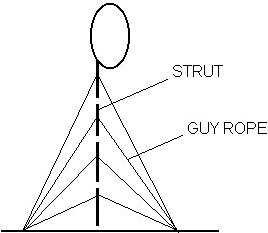 |
Fig 3: The human Musculoskeletal System can be
compared to a system with struts and guy ropes. When engineers
design such systems, the guy ropes are spaced well away. |
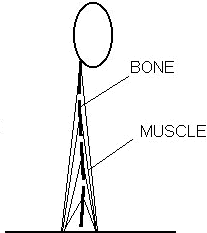 |
Fig 4: In the human body, the guy ropes
(muscles) are closely spaced making the system very fine-tuned
and critical. |
The bones and muscles in the body – which complement one another,
and act in unison – form the musculoskeletal system. This system is
very, very complex and very critically put together. It is so
complex that so far no computer model has been made to explain human
movement in a satisfactory way.
Let us find out why the design of the musculoskeletal system is
so complex and critical. In Fig 3 we see a structure which engineers
design, consisting of struts hinged end-to-end and supported with
the help of guy ropes. Engineers design such systems with great
care, spacing out the guy ropes to make the structure strong and
stable. The human body can be compared to this system by visualizing
the struts as bones and the guy ropes as muscles. In the human body
however, the guy ropes are very close together, Fig 4, making the
structure very critical and prone to POSTURAL COLLAPSE.
5. POSTURAL COLLAPSE:
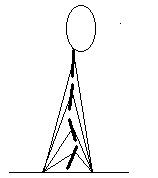 |
Fig 5. Postural collapse |
What is Postural Collapse? Postural Collapse is a condition
where the musculoskeletal system is so badly deformed that it is no
longer possible to easily revert to the original balanced state. In
Fig 5, we see a system of links (bones) controlled by ropes
(muscles). In the lower extremities the joints have moved beyond
their safe limit causing a group of muscles to be over-contracted.
When muscles are over-contracted, over a period of time they stop
functioning in a normal way, and cannot readily be relaxed to their
original length. (The distortion visualized here will also
significantly alter the orientation of bones and muscles higher up,
effectively distorting the complete structure!)
As a consequence of this distortion, it is no longer possible for
the muscles to contract powerfully, since their natural functioning
will by inhibited by the brain to protect the integrity of the body.
What appears to be a local weakness, will in reality distort and
weaken the whole body - it is a condition that cannot be easily
corrected.
6. HOW DO WE KNOW THAT PEOPLE
COLLAPSE THEIR POSTURE?
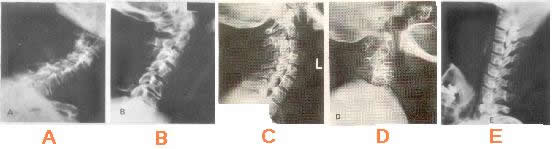 |
| Fig 6: Distortions of the neck. A. Neck
collapsed forward. B. Head back, Upper neck forward, lower
neck back. C. Head pulled back. D. Lower neck collapsed out of
sight. E. Overstraightened neck. Fourth vertebra slipped
forward on fifth. (From The Alexander Principle, by Dr.
Wilfred Barlow). |
It is difficult, with our available knowledge, to comment on
people’s posture by looking at them externally. It is necessary to
look at the internal orientation of bones and muscles. The
orientation of muscles unfortunately, cannot be determined readily
due to non-availability of suitable sensing equipments. The
orientation of bones on the other hand can be studied with the help
of X rays. Here too, faults are readily discernable only in X rays
taken of the Cervical Vertebrae, as seen in Fig 6. It is not too
difficult to visualize that faults shown in the figure will be very
difficult to correct.
Studying Fig 6, we can make the following additional deductions.
One, if the bones are distorted in this way, the muscular system
must be similarly distorted. Two, It is unlikely that distortion
will be localized, similar distortions must exist in the rest of the
body - even though existing sensing devices may not readily allow us
to visualize these distortions. Three, because of the phenomenon of
postural collapse, posture can only be defined as being very good or
very bad, it is difficult to define something in between. Four,
postural collapse is bound to alter our external appearance (we do
not have the tools at present to understand from our external
appearance, the full gravity of the problem – it will also be
inconsiderate to tell a person that his external appearance
indicates postural problems; all of us value our external
appearance)

A book is available ( 294 pages, 190 figures) which discusses
this subject in greater detail. Please contact sraj99@gmail.com
Discuss: humanposture@yahoogroups.com
Paper : Paper published in Aerospace Mechanisms
Symposium 2005, Bangalore, India:
‘ The Performance and Stability of Mechanisms in Living
Organisms’
If you wish to have an E Copy please contactmailto:sraj99@gmail.com
Blog:
humanposture.blogspot.com
|